She Went Looking for Connection and Found Shame Instead
Brené Brown did not set out to become the world's most recognizable voice on vulnerability. She set out to study human connection, specifically what gets in the way of it. What she found, buried in years of qualitative research interviews, stopped her cold: the thing standing between most people and genuine connection was shame. The fear that if someone truly saw them, they would not be loved.
That discovery sent her to therapy. It also sent her, eventually, to a TED stage in Houston in 2010, where she gave a talk that has now been watched over 60 million times. One of the most viewed TED talks in history. About vulnerability.
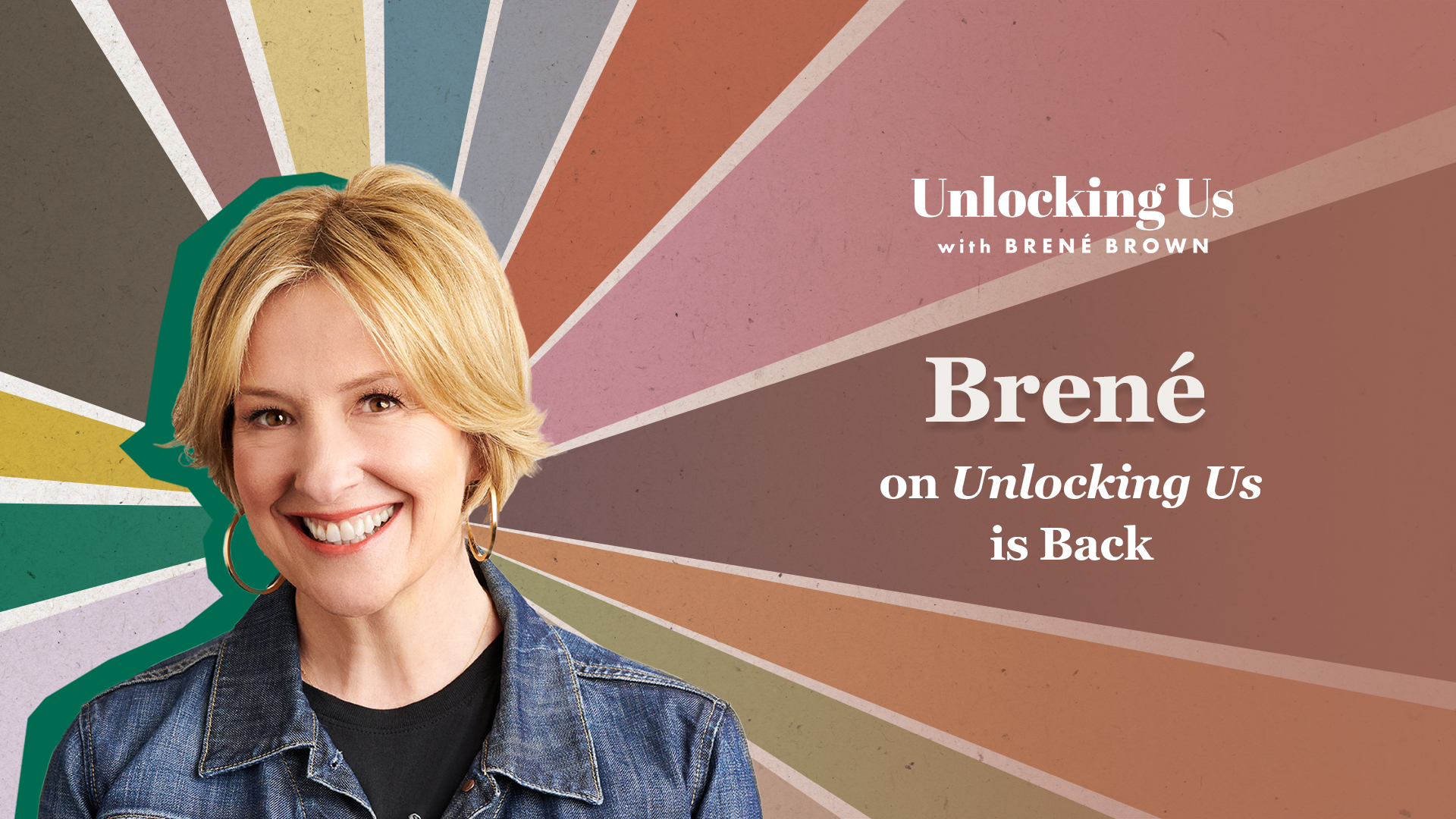
Unlocking Us is where that work breathes. Where it gets messy and personal and honest in ways a book never quite can.
Who Brené Brown Is
She is a research professor at the University of Houston, where she holds an endowed chair at the Graduate College of Social Work. She has spent over two decades using rigorous qualitative methodology to study courage, shame, vulnerability, and empathy. Six of her books have hit number one on the New York Times bestseller list. Her research has been translated into more than 30 languages.
She is also, by her own account, a classic perfectionist who initially resisted everything her data was telling her. A Texan with a therapist and a lot of feelings, who figured out how to turn social science into something that lands in the body, not just the mind.
That combination, the academic credibility and the radical personal honesty, is what makes her work unlike most of what passes for self-help.
What the Podcast Actually Is
Brené describes Unlocking Us as a podcast that explores the ideas, stories, experiences, books, films, and music that reflect the universal experiences of being human. From the bravest moments to the most brokenhearted.
In practice it moves between two formats. Conversation episodes bring in guests who are teaching her something, challenging her thinking, or sitting with her in questions that don't have clean answers. Solo episodes are where she talks directly to listeners, often unpacking new research, sharing something she is working through personally, or going deep on a single concept from her work.
The guests have included grief expert David Kessler, writer Glennon Doyle, activist Tarana Burke who started the Me Too movement, Dr. Mary Claire Haver on menopause and women's health, Esther Perel, historian Heather Cox Richardson, and poet and activist Andrea Gibson. The range is wide. The thread running through everything is the same question: what does it mean to live and love with your whole heart, even when that is terrifying?
The Ideas at the Centre
If you have never spent time with Brené's research, a few concepts that come up repeatedly in the podcast are worth understanding before you start:
Wholeheartedness is the word she uses for the quality she found in people who had a deep sense of love and belonging, regardless of whether the circumstances of their lives were particularly easy. Wholehearted people had certain things in common: they cultivated authenticity, they let go of perfectionism, they chose courage over comfort. They were not without shame or fear. They just didn't let those things run the show.
Armor is her term for the ways we protect ourselves from vulnerability: perfectionism, numbing, cynicism, foreboding joy, the constant low-level bracing for things to go wrong. She is specific and funny about armor in a way that makes you recognize your own in real time.
Shame resilience is not the same as shamelessness. It is the capacity to recognize shame when it shows up, understand what triggered it, and move through it without letting it rewrite your story about your own worth.
These are not casual ideas. They come from thousands of research interviews. And the podcast is one of the clearest ways to absorb them without reading six books.
An Honest Note on the Season
Unlocking Us returned from a hiatus in late 2024 in a new format: focused series released quarterly, roughly 12 to 15 episodes a year, dropping on Wednesdays. If you are coming to it fresh, the back catalogue is rich and worth going back into. Some of the most beloved episodes are earlier ones: her conversations on grief, on belonging, on what happens when we try to numb pain and accidentally numb joy at the same time.
Her sign-off is the same every time. Stay awkward, brave, and kind. After a while you realize it is not a throwaway. It is actually the whole thesis.
Who This Is For
Any woman who has ever felt like her inner critic was the loudest voice in the room. Any woman navigating shame, perfectionism, a sense of not-enough-ness, grief, or the complicated territory of showing up honestly in her relationships. Any woman who wants her listening time to leave her feeling less alone and more clear, not just entertained.
The podcast is free. It is available everywhere you listen. And it pairs well with almost any of the other resources in this library, including Take Back Your Brain, We Can Do Hard Things, and the work of PSI, because all of them are ultimately asking the same question: what does it cost us to pretend we are fine, and what becomes possible when we stop?
"We are hardwired for connection, and connecting requires courage, vulnerability, and conversation. We don't have to do life alone. We were never meant to."
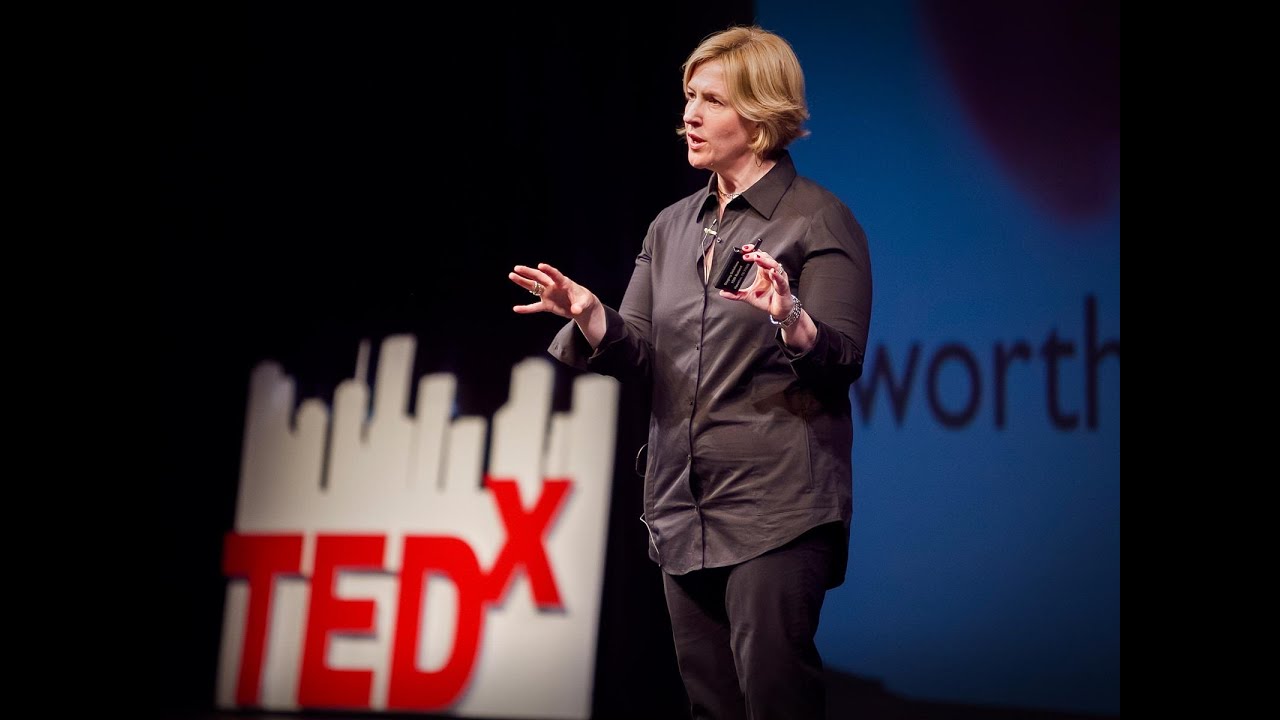 The talk that started it all. 60 million views and counting.