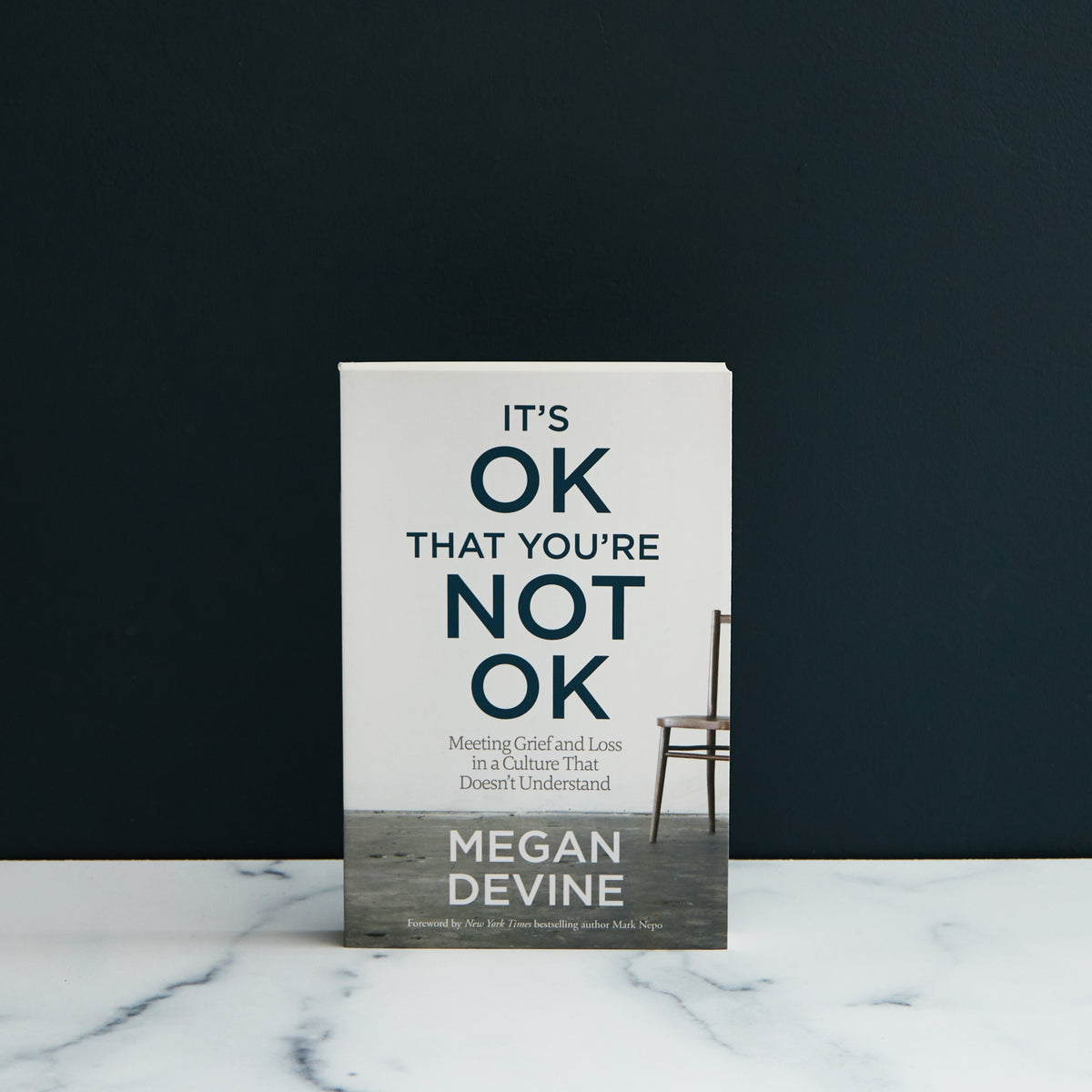
Megan Devine had spent a decade as a grief therapist, telling her clients the things therapists are trained to say. You'll get through this. Time heals. There's a process, and you'll move through it. Then, in 2009, she watched her partner Matt drown in a river three days before his fortieth birthday, and everything she thought she knew about grief came apart in her hands. None of it was true. None of it helped. It's OK That You're Not OK is what she wrote on the other side of that, and it is widely considered one of the most honest books ever written on loss, not despite the fact that it refuses to comfort you in the usual ways, but because of it.
The premise sits right there in the title, and it's a genuinely radical one in a culture obsessed with stages, timelines, and "moving on." Devine's central argument is that grief is not a problem to be solved, fixed, or recovered from. It is a natural, appropriate response to loss, and trying to rush someone out of it, even with the kindest of intentions, usually does more harm than good. Grief no more needs a solution than love needs a solution, she writes, and that single line tends to be the moment readers describe feeling truly seen for the first time since their loss happened. She is sharply critical of the "stages of grief" model many of us were taught, the well-meaning friends who push closure, the unspoken cultural deadline by which you're expected to seem fine again. Instead, she offers something steadier: permission to build a life alongside grief rather than work your way out of it.

What keeps this from being purely a permission slip to suffer is the second half of the book, which turns genuinely practical. Devine, still working as a clinician throughout, offers real tools for the physical and cognitive chaos grief brings: the brain fog, the disrupted sleep, the anxiety that arrives uninvited and won't leave. She also writes directly to the people standing beside a griever, the friends and family who want to help but don't know how, with concrete guidance on what to say instead of "everything happens for a reason." It is, in a real sense, two books in one: a hand extended to the person grieving, and a quiet correction for everyone around them.
A gentle note before you pick it up: this is not recommended as an early read in the immediate, raw days after a loss, several reviewers and grief organisations flag this specifically. It's a book best met once the initial shock has eased slightly and you have a bit more capacity to sit with it. If you're newly grieving, even an hour with a trusted person or a grief counsellor first may serve you better than diving straight into a book, however good.
For anyone tired of being asked if they're "better now," or quietly furious at the next person who tells them everything happens for a reason, this is the book that finally says: you're not broken. You're grieving. And that is allowed to take exactly as long as it takes.