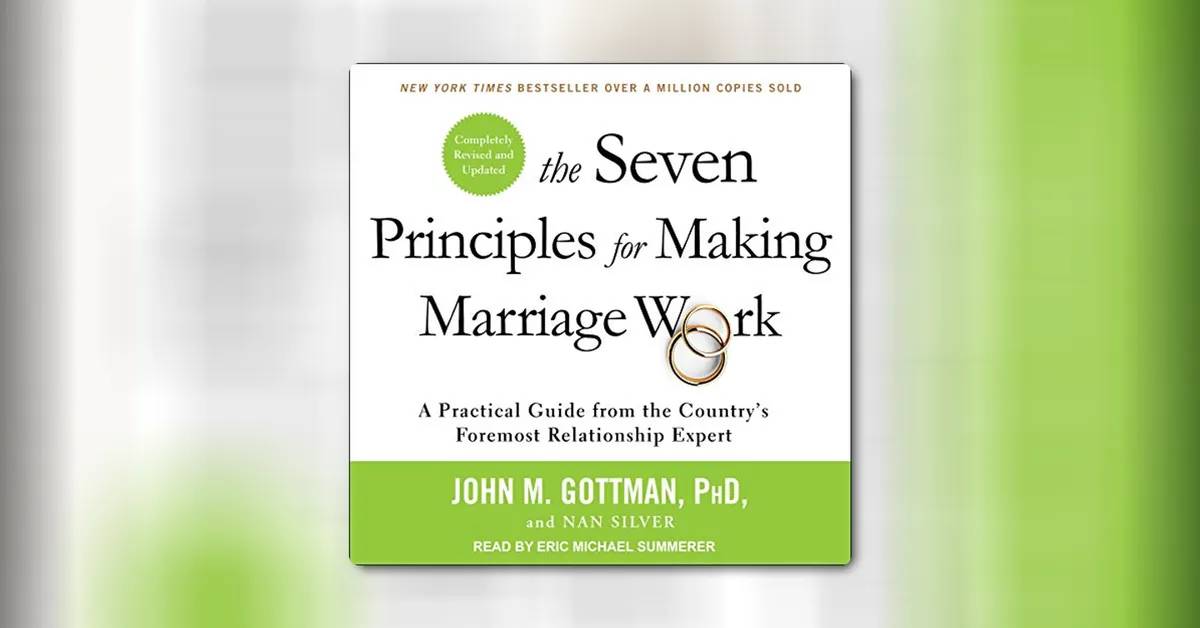
There's something almost unsettling about a man who can sit across from a couple for five minutes and predict, with 91% accuracy, whether they'll still be married in a few years. That man is Dr. John Gottman, and the prediction isn't a parlour trick. It's the result of fourteen years spent observing more than 650 real couples inside what he and his research team came to call the Love Lab, a Seattle apartment wired with cameras, tracking everything from heart rate to tone of voice to the precise way an argument begins. The Seven Principles for Making Marriage Work is what came out the other side of all that watching, and it remains, decades later, one of the most trusted relationship books a therapist will hand you.
What makes Gottman's work land differently than most relationship advice is the specificity of what he found. He calls them the Four Horsemen: criticism, contempt, defensiveness, and stonewalling. Not the presence of conflict itself, conflict, it turns out, is normal and even healthy, but the way a couple fights. Criticism attacks a partner's character rather than addressing a specific behaviour. Contempt, the most corrosive of the four, shows up as eye-rolling, sarcasm, the quiet conviction that you're simply better than the person across from you, and Gottman found it to be the single strongest predictor of divorce, corrosive enough to actually weaken a partner's immune response over time. Defensiveness turns every complaint into a counter-attack. Stonewalling is the silent withdrawal, the shutting down rather than showing up. If you've ever sat in a couples therapy session, or even just scrolled relationship content online, you've likely encountered this language already; it has genuinely become the vocabulary of the field.
But the book isn't only a diagnostic tool for what's going wrong. The seven principles themselves are about what successful couples do, almost instinctively: building detailed "love maps" of each other's inner worlds, nurturing fondness rather than letting resentment quietly accumulate, turning toward small bids for connection instead of away from them, allowing a partner real influence over decisions, and finding a way through the conflicts that genuinely have no resolution rather than demanding they be solved. One of Gottman's more comforting findings is that happy couples aren't smarter or more compatible than anyone else. They've simply gotten better at repair, the small jokes, gestures, and apologies that interrupt a fight before it spirals, and at letting those repair attempts actually land instead of brushing them off.
It's worth knowing this book is grounded in heterosexual marriage as its primary lens (Gottman's later research has since expanded into same-sex relationships as well), and some researchers have raised fair methodological questions over the years about how outcome data from his therapy programs was reported. None of that undermines the core diagnostic framework, the Four Horsemen remain one of the most cited, clinically respected concepts in relationship psychology today, used everywhere from private therapy practices to the U.S. Army's relationship resilience training.
If you've ever wondered whether the way you and your partner argue says something deeper about where things are headed, this book gives you the actual language for it, and, more usefully, a way back toward each other before contempt gets the final word.